
A former colleague once described their view of management as a role measured by two* pillars. As an IC, I really like this framing of it and it's helped me a ton of times in knowing how to best work with different types of EMs over the years. You can kinda think of them on a Y-axis where 100 is great and 0 is awful/non-existent.
Pillar 1: Technical familiarity
This pillar is the manager's technical familiarity with the problem space. It's their ability to not only understand the underlying tech stack but also defend and drive the technical decisions being made by that team.
Pillar 2: Ability to grow people
This pillar is the manager's ability to grow people that report to them. Not just their individual technical ability, but their team's efficacy as a whole.
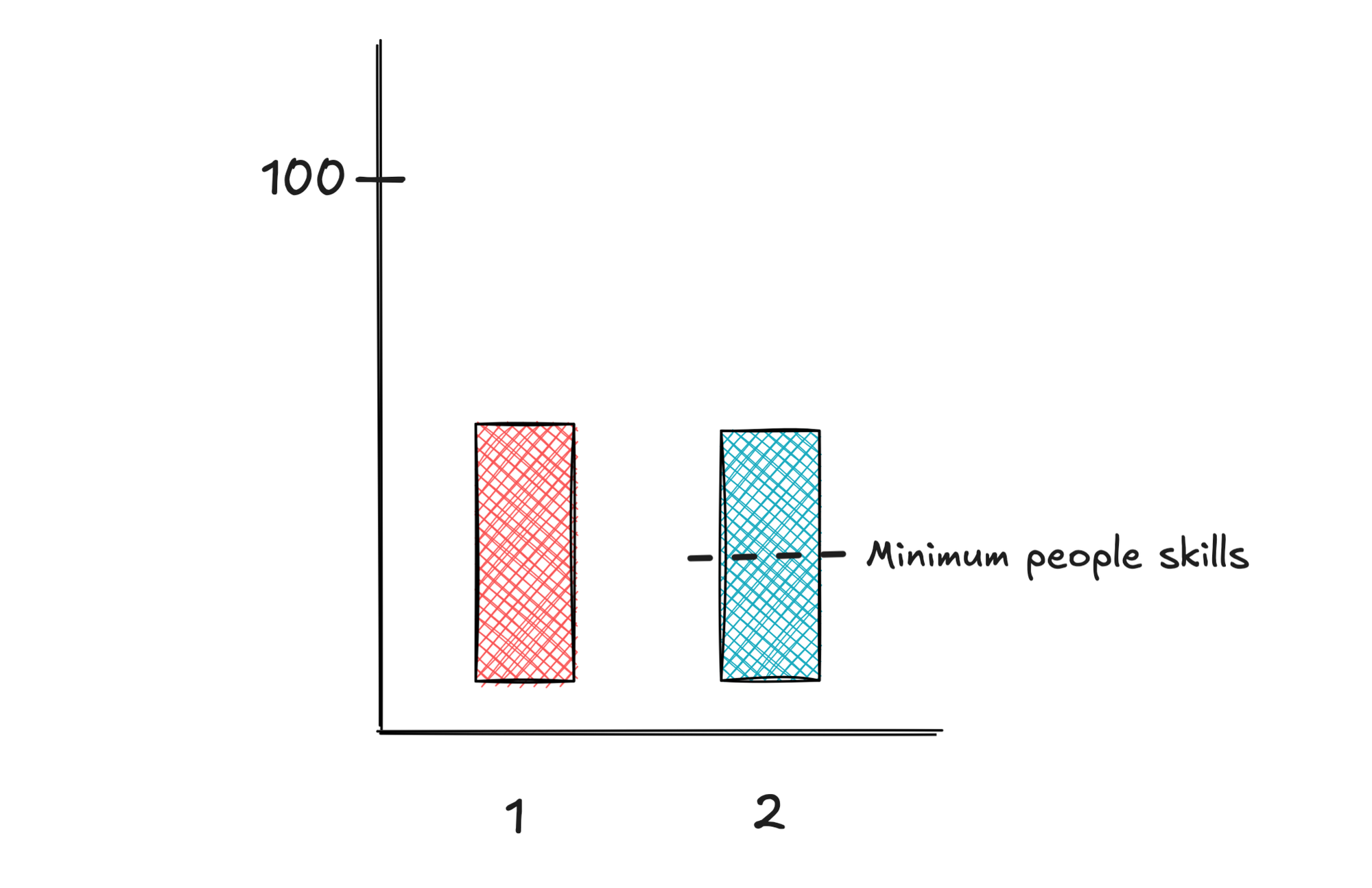
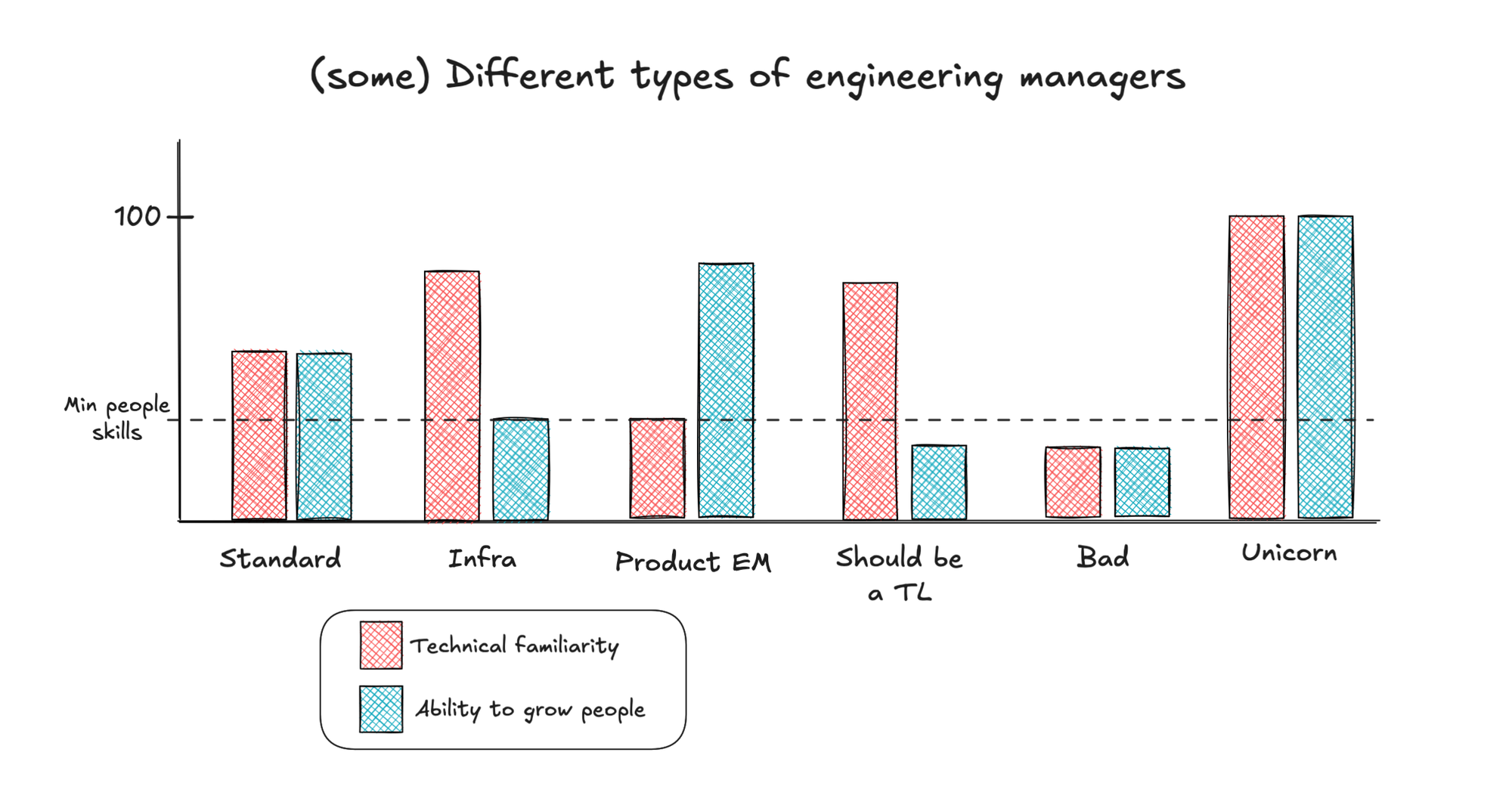
The left/red side is pillar 1 (technical familiarity), the right/blue side is pillar 2 (people growth.) Different managers are at different levels on these pillars, but the important part is that they need to add up to 100. Pillar 2 also has a minimum.
Now let's look at six different combinations of this.
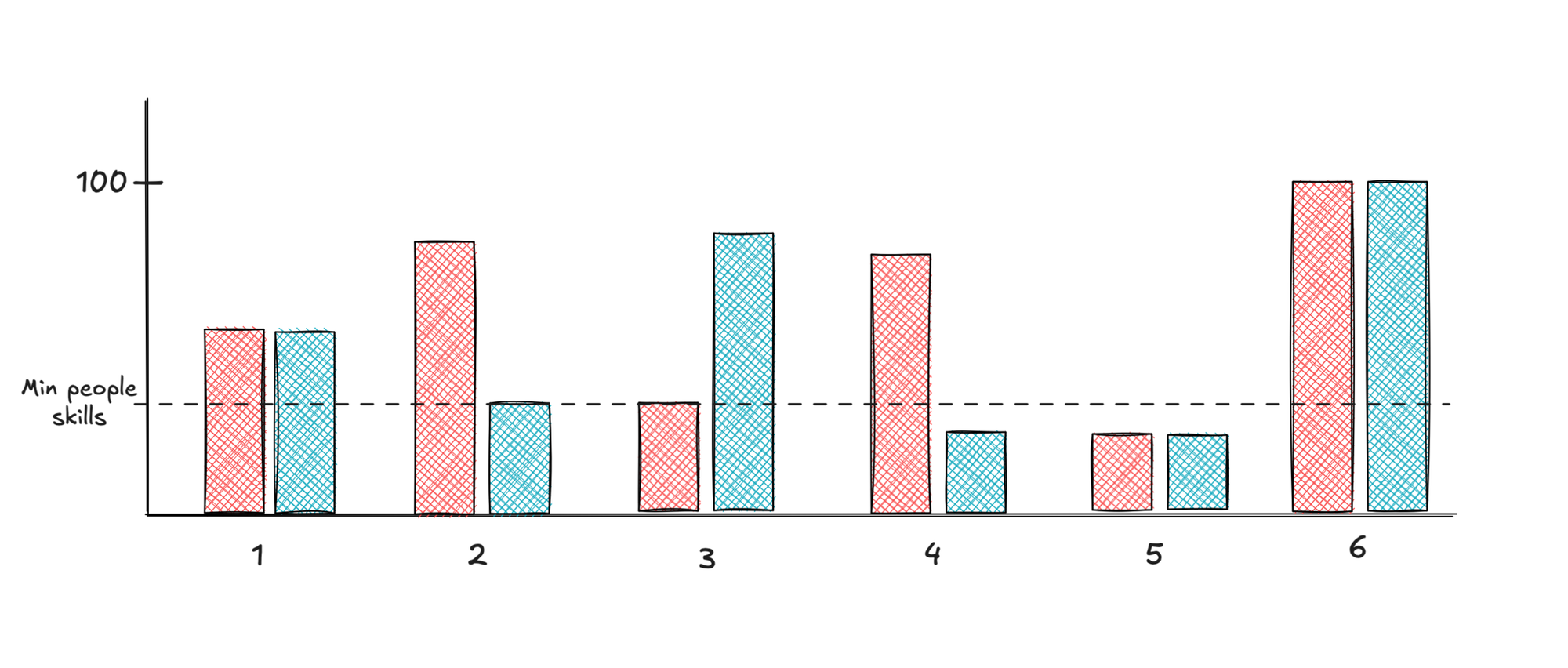
- This is the standard EM. They are fine at both the technical and the human side. They will probably get to middle management and park there for the rest of their career and that's wholly ok. They're reliable and versatile.
- This is your infrastructure manager, or a manager that oversees something like an SDK. Teams like this demand a higher level of technical familiarity than a typical product team and are often working on the frontier of a specific stack or whose concerns are purely engineering (vs design/product/etc). They speak your language, but need your help with career planning and may not do well with junior-heavy teams.
- Not all infra managers are like this, but if you have a manager with this balance, this is a safer bet.
- This is your product team EM, or a manager that oversees a vertically stacked team. They have reports in multiple tech stacks they don't need to know the nitty gritty of, and they are more valuable making sure everyone's rowing the right direction anyway. They'll delegate often, good with junior ICs, but cannot offer as much direct mentorship and lean on their senior ICs more for that.
- Again, not all product team managers are like this, but if you have a manager with this balance this will get the best out of them.
- This is an EM that should probably be a tech lead. Or they're an IC that maybe felt forced into management, either out of necessity or because our industry is generally bad at promoting ICs past senior.
- They can grow into this, but if they're still at this ratio after a while that's bad for everyone.
- This is a bad manager. Recognize this early, because they can do tremendous damage to the team or wider org. They can fly under the radar for a while if they are carried by a productive wider org or a strong team, but it won't hold forever. Every team-wide exodus I've ever been on or seen has been under a manager like this.
- If you're an IC under a manager like this, transfer ASAP. I have never seen a bad manager fired before their reports.
- This is a unicorn. They are usually recognized early and get fast-tracked to becoming a director. These are the managers people follow to other companies, and companies that don't recognize and support them are going to lose both them and the outsized impact they can have when enabled.
There are obviously many other types! Honorable mention in here is probably one with really high people skill and really low technical familiarity. I don't think this is common at the EM level, but I do think directors and up tend to naturally trend this way as they become more removed from IC work.
Here's the final, labeled chart. Hope this post is helpful!
*there are obviously other pillars, these being the primary